01Context
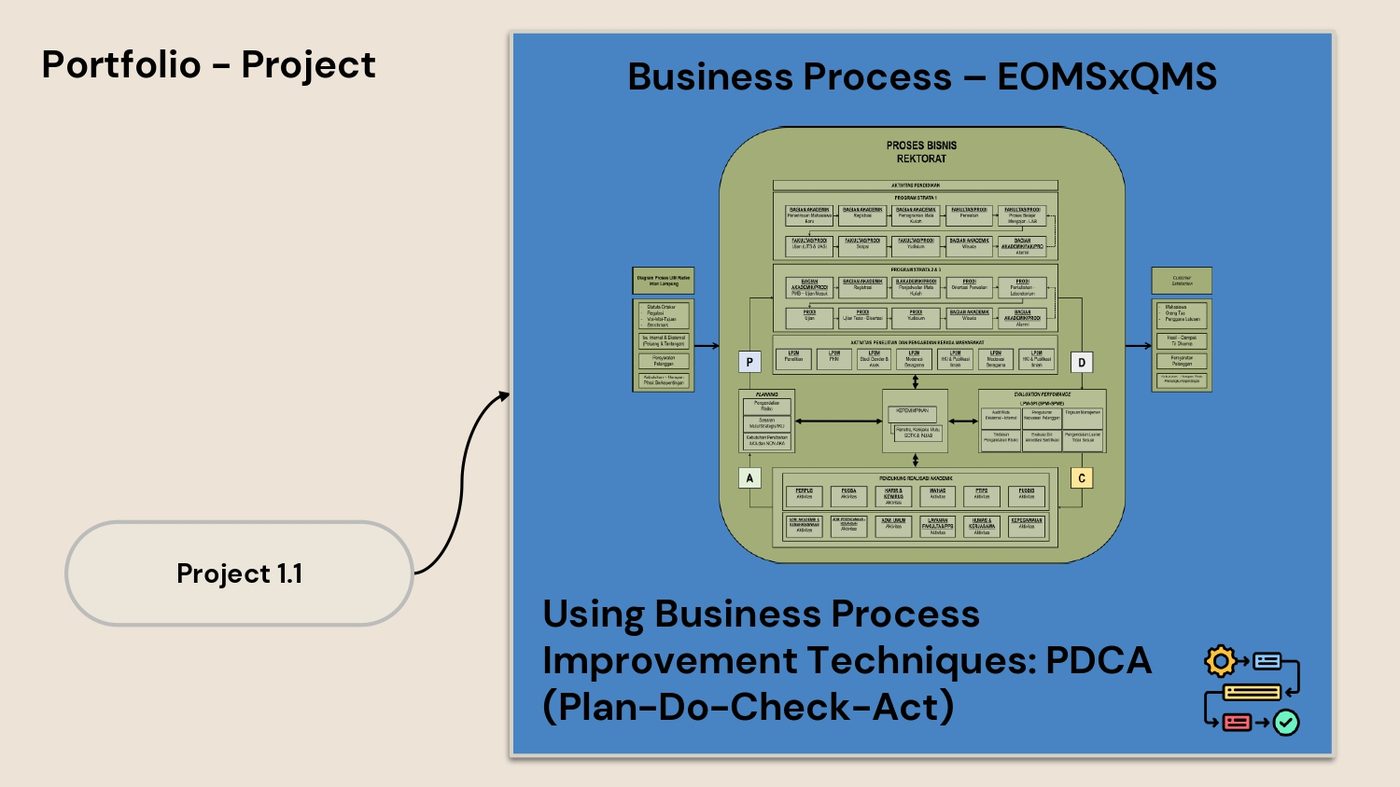
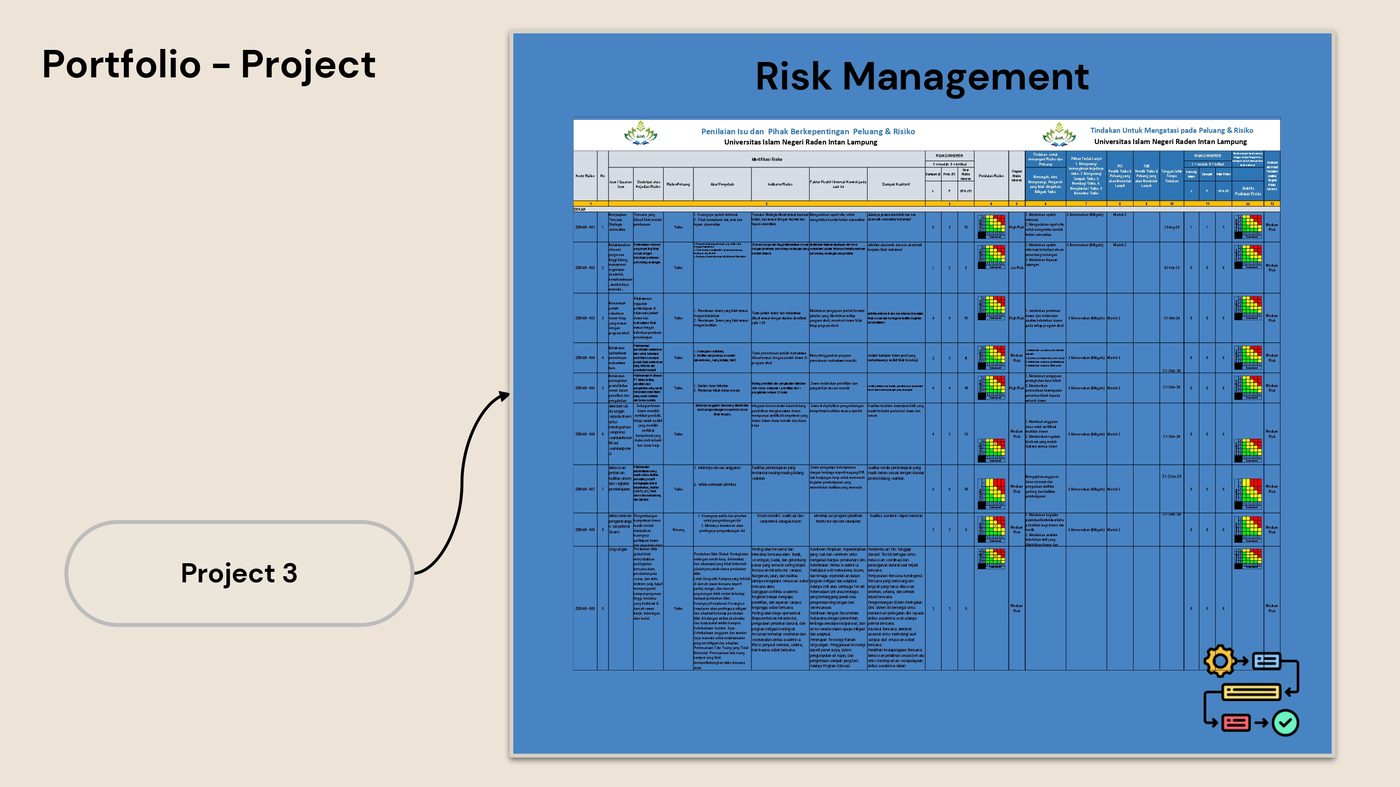
UIN Raden Intan Lampung wanted to implement an integrated Quality Management System: ISO 9001 (quality) and ISO 21001 (educational organizations). The scope was large — 15 units, 6 faculties, and 47 study programs. I joined as an Associate Consultant under the Lead Consultant from TMIN Consulting.
02Problem
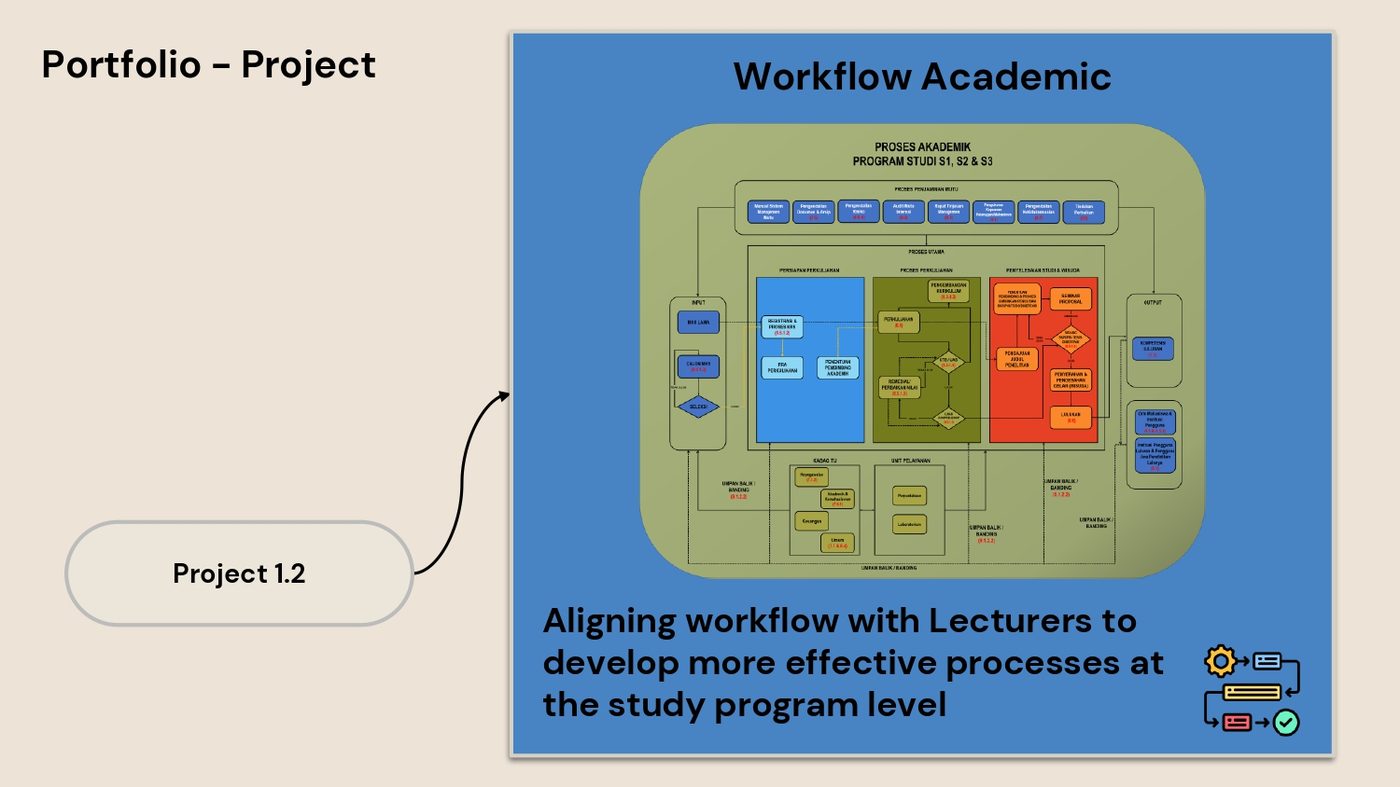
- Work processes across units weren't documented in a consistent format.
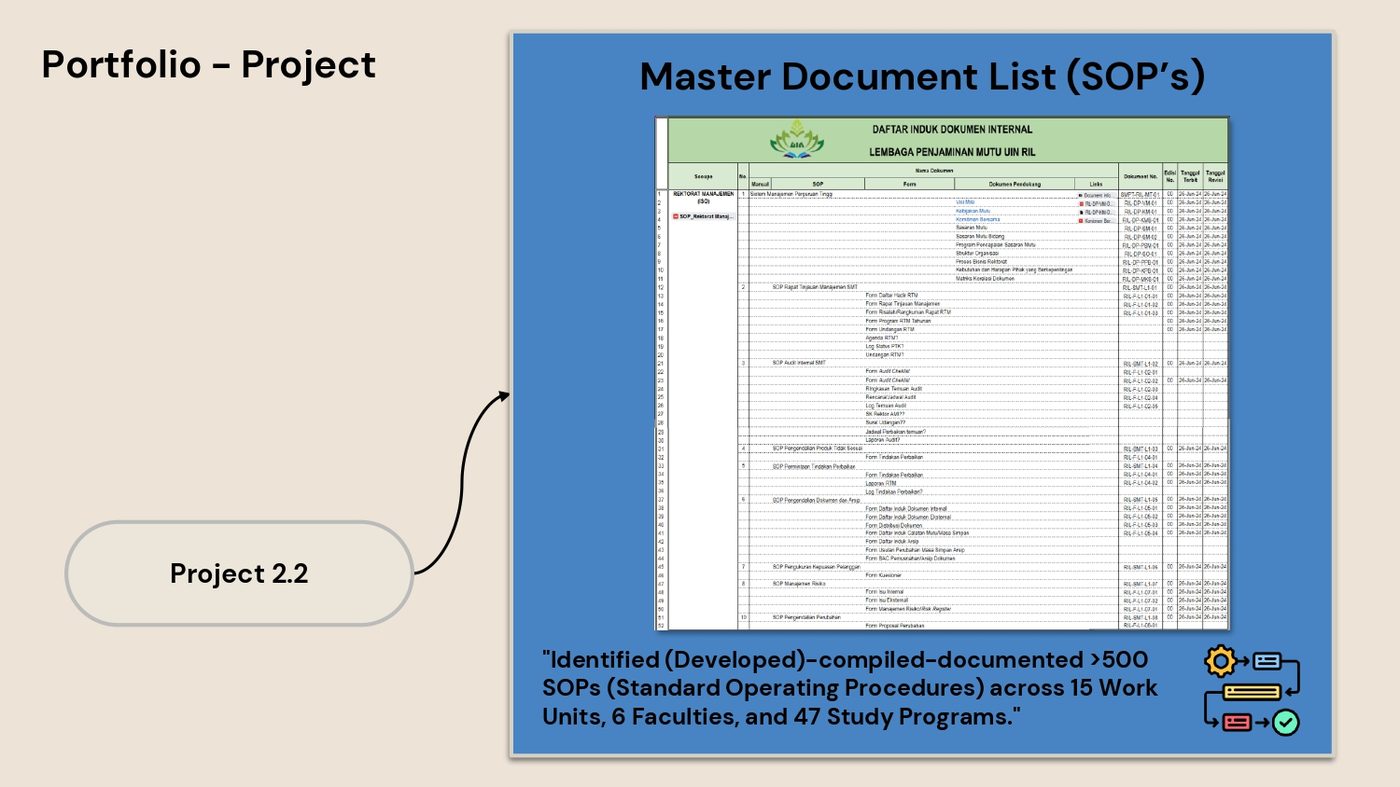
- There was no master document list, so it was hard to know which SOP was current.
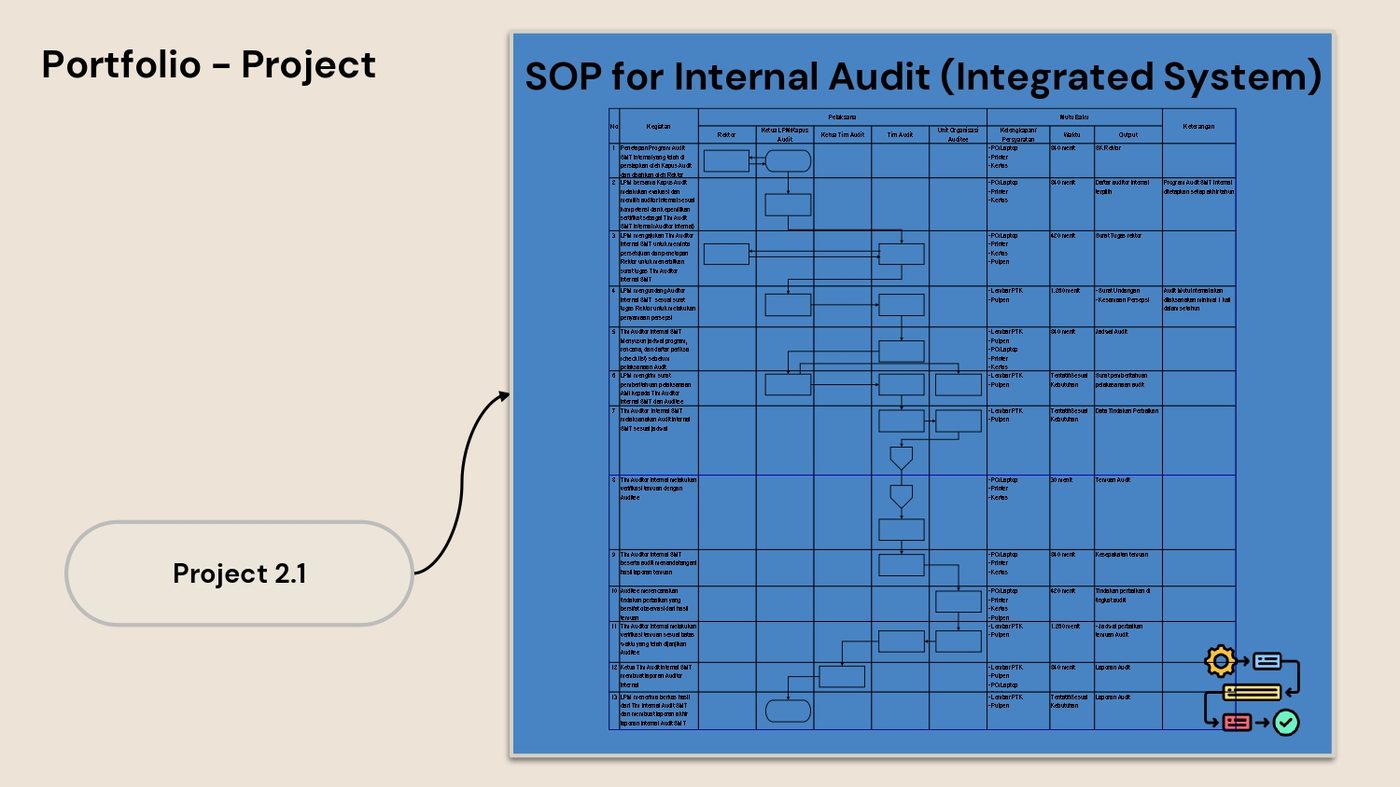
- No internal audit mechanism existed to catch non-conformances early.
03Approach: PDCA
04Challenge: resistance to change
The biggest challenge wasn't the documents — it was the people. Many staff and lecturers struggled to accept a new system after years of working the old way. We tackled it on four fronts:
- Socialization & training for every unit, so everyone understood why the change was necessary.
- Grounded language. Rigid ISO clauses were translated into everyday work examples.
- Co-creation. SOPs were drafted together with staff from each unit, not handed down finished.
- One-on-one support for the units struggling most, until they were ready to be audited.
05Project management
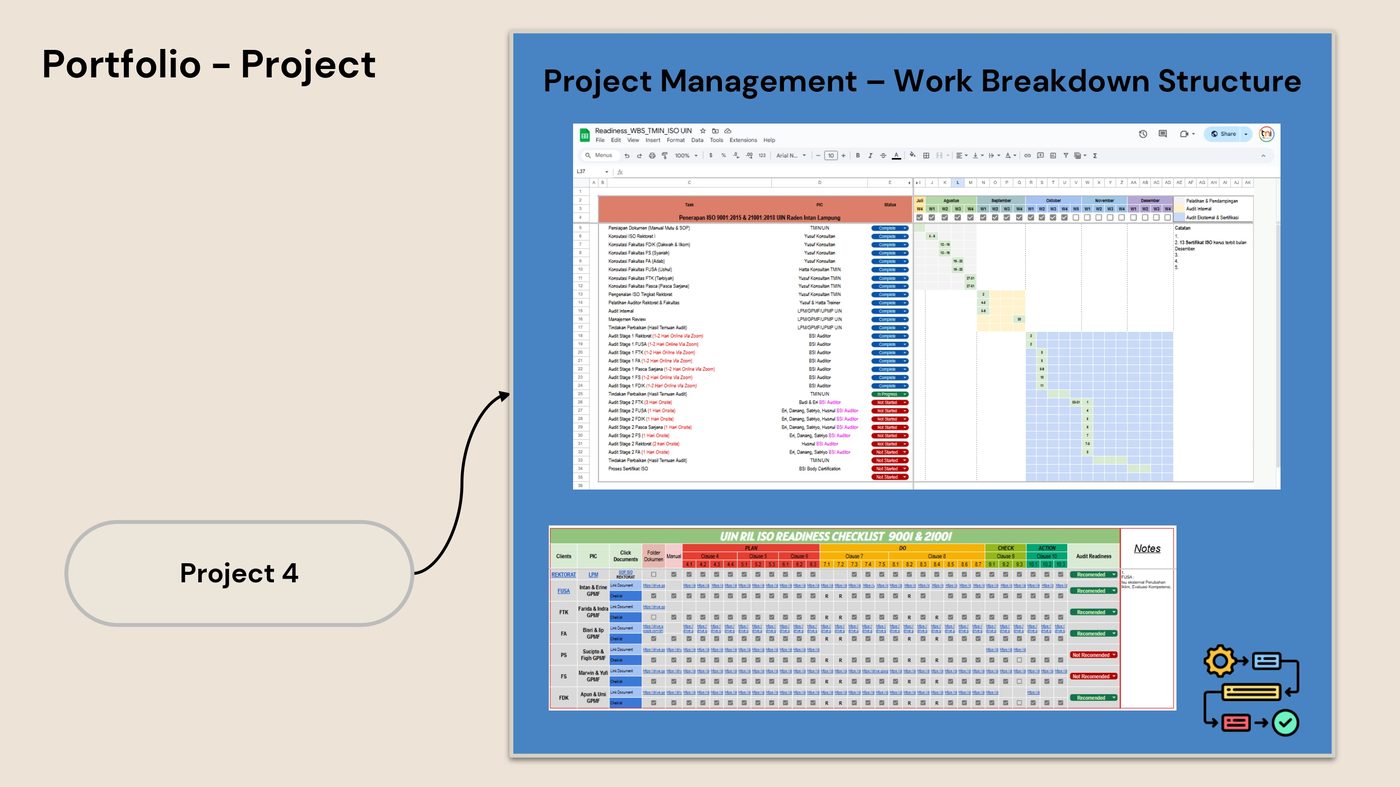
With dozens of units moving at once, progress was tracked via a Work Breakdown Structure and a readiness checklist per unit, so the team could see which units were ready for audit and which needed extra support.
06Results
- UIN Raden Intan passed ISO 9001 & 21001 certification.
- 500+ SOPs documented across all units, faculties, and study programs.
- Non-conformance dropped 30% between the first audit and the next.
07Why this is relevant to product management
The job is fundamentally the same: understanding the needs of many stakeholders, translating technical language into user language, involving users in designing the solution, then measuring the results. The difference is that what I built here was a work system, not an app.